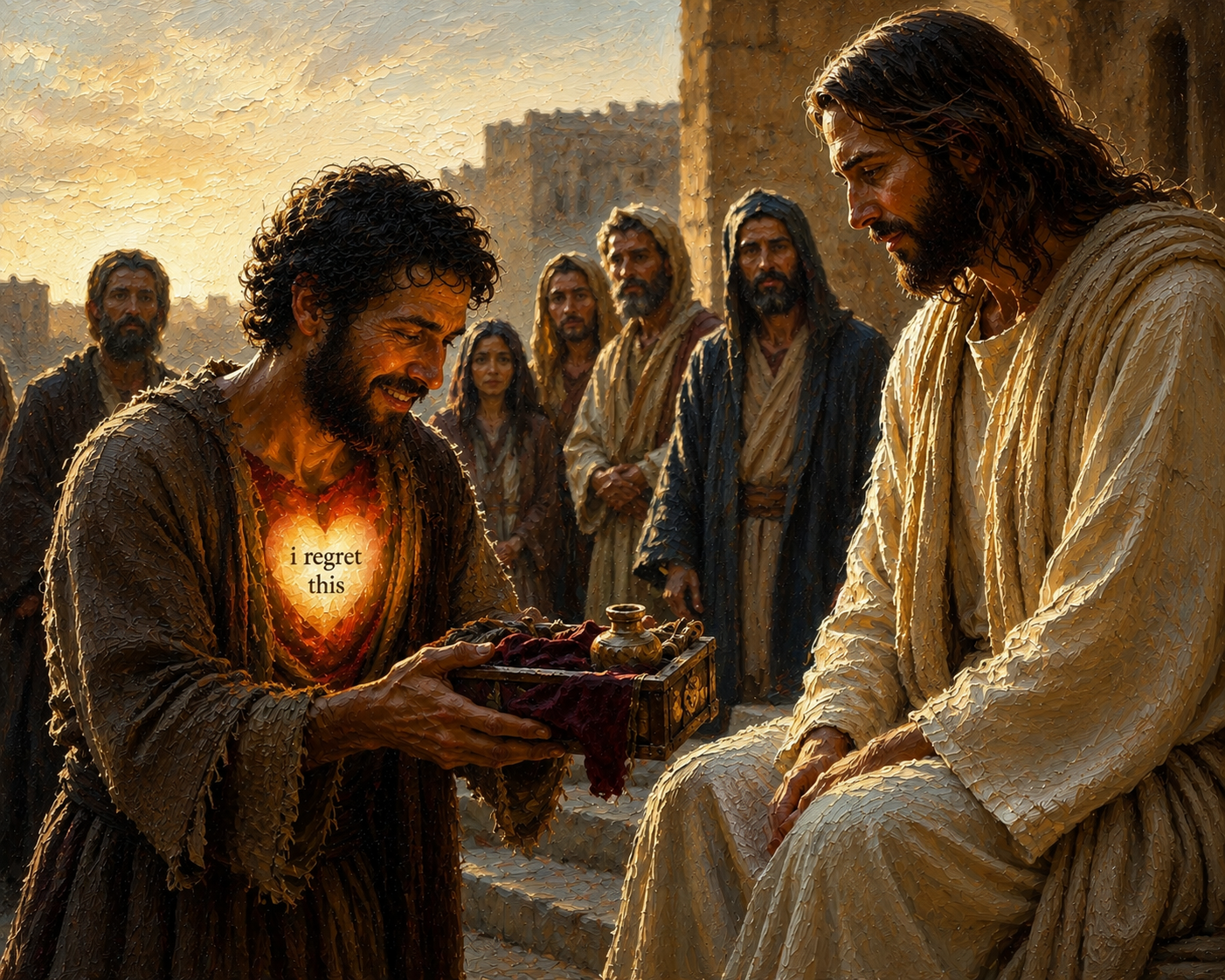


As believers, we must guard against triumphalism and many of us are to repent of it. This insidious teaching within the body of Christ posits that a scripture must be sought after, found and deployed for every impediment or distress encountered. Rather than leaning on the Lord in difficulty and seeking His will, the triumphalist impulse compels one to seek for an escape route through scripture. This is not faith; it is the appearance of faith without its substance.
At its theological core, triumphalism is a collapsed eschatology. It takes what fits into the consummated kingdom and forces it entirely into the present age, treating the believer as already living in the fullness of resurrection life. The consequence is severe: suffering, unanswered prayer, and seasons of lack are misread as signals of faith failure rather than as normal and purposeful dimensions of the Christian walk.
An attack on the operating conditions of faith
Triumphalism presents itself as the highest expression of faith; bold, declarative ,victorious and sufficiently daring to believe God for everything He promised the believer. Frequently, it possesses a warrior’s mindset to conquer any and all that would stand in its way. Yet, it obliterates the very condition under which genuine faith functions. Faith operates in the tension between what is promised and what is not yet seen.We walk by faith and not by sight (2 Corinthians 5:7). Faith is the substance of things hoped for, the evidence of things not yet seen (Hebrews 11:1). Hope that is already possessed is no longer hope (Romans 8:24).
When triumphalism collapses that gap, insisting on instantaneous and total possession, faith has nothing left to do. It is reduced to technique: the correct words, the correct decrees and the correct frequency of confession. That however is not faith; that is presumption dressed in the vocabulary of faith.
The absence of lament
Triumphalism refuses to acknowledge discomfort and distress. It treats Scripture not as revelation to be submitted to, but as a tool to be deployed in order to control outcomes. A demon is mostly blamed, a curse is presumed and repented of. These avenues are not wrong however to assume that is the posture we ought to assume without initially seeking the Lord is wrong. Many of us assume generational iniquity is operational even when that is not confirmed, and swiftly seek long and arduous prayer points to be liberated. Prayer replaces responsibility, a lack of diligence and discipline is avoided through declarations to create a desired outcome. This posture pushes the Lord away , for He is the God who promised to be with us in trouble (Psalm 91), who calls the believer to cry out to Him in the day of trouble, promising to answer and be glorified (Psalm 50:15). He is not the God who eliminates the valley but the God who accompanies us through it.
The Psalmist declares: “Even though I walk through the valley of the shadow of death, I will fear no evil, for your rod and your staff comfort me” (Psalm 23:4). The preposition is decisive and unambiguous; through, not around or circumventing. And again: “Though I walk in the midst of trouble, you will revive me; you will stretch out your hand against the wrath of my enemies, and your right hand will deliver me” (Psalm 138:7). God revives life within trouble. He does not promise the absence of it.
Scripture is saturated with lament; the Psalms are largely a lament literature. Paul wept frequently while writing letters to the churches, the prophets wept and Christ Himself wept at the tomb of Lazarus. Even with resurrection power in His hands, He did not bypass nor despise the grief beckoned by the moment. Triumphalism would have rebuked the tears.
The incarnation as direct refutation
Triumphalism’s deepest problem is Christological. God in flesh voluntarily entered the full range of human limitation and weakness; hunger, thirst, weariness, grief, temptation, suffering, and death. He did not decree His way out of Gethsemane. He sweat drops of blood and prayed, “not my will, but Yours” this is the language of submission, not of conquest.
Jesus slept in the storm-tossed boat; He did not rebuke the innate need for sleep. He said “I thirst” from the cross and He asked the Samaritan woman for water. Even His glorified resurrection body ate fish with His disciples. Moreover,we do well to note: triumphalism implicitly sets a standard for believers that Christ Himself did not model or inspire. On what theological ground does any system promise permanent exemption from what the incarnate Son of God willingly bore?
Our high priest is not unable to sympathize with our weaknesses; He was tempted in every respect as we are (Hebrews 4:15). He is acquainted with our weaknesses because He lived them. Triumphalism robs believers of that comfort by insisting the weaknesses should not be experienced.
Enemies of the cross
Paul, with tears, warned of those who “walk as enemies of the cross of Christ” (Philippians 3:18). They do not necessarily deny Christ’s person; however, they refuse the shape of His cross as the pattern for the believer’s life. Triumphalism is precisely this: a spirituality that migrates in the opposite direction from Christ’s own embodied, suffering, submissive walk. It does not present as submissive or obedient to the established way, it invents a novel one within the framework of the Word. It is against His method, His posture, and His established way. The Psalms are replete with grief, obscurity, questioning the Lord, sorrow, being pursued by adversaries, being afflicted with sickness and crying out to the Lord to bring deliverance. This pattern still exists in our contemporary times.
The root: a primordial rebellion
The root of triumphalism is not a contemporary doctrinal novelty. It traces to the oldest rebellion in existence. In Isaiah 14, Lucifer’s fall is recorded through five “I will” statements, each an assertion of the will of a creature against the Creator’s sovereignty, culminating in: “I will be like the Most High.” This is the summary of primordial rebellion: a creature’s desire for ontological equivalence with the Creator. This means a creature seeks to be or treated the same with the Lord in essence or nature.
The serpent exported that same rebellion into the human domain: “You shall be like God” (Genesis 3:5). The decree-and-declare mechanism of triumphalism, speaking things into existence, claiming divine creative authority through human proclamations, echoes elements of that ancient temptation in theological, christian attire whether intended or unintended. Believers do not possess creative speech as God does, for He is called Creator for a reason. When human words are treated as constitutive, bringing forth realities by utterance, the creature has been seduced into occupying a position that belongs solely to God.
This is not a new temptation. The prodigal son heard a subtler version of the same lie, that the Father’s inheritance could be retained apart from submission to His authority. He sought to experience the resources without the relationship, the blessing without the submission. Triumphalism seduces the believer with that same ancient promise: that God’s provisions can be leveraged on one’s own terms. The serpent’s deception is still at work.
Consequence
The repercussions of triumphalism are severe. It produces believers who are blessing-focused rather than Christ-centered, relating to Christ primarily as a mechanism through which desired outcomes are secured rather than as the supreme good Himself. Paul’s declaration in Philippians 3:8 — “I count all things as loss because of the surpassing worth of knowing Christ Jesus my Lord” is incomprehensible and utterly unfathomable to a blessing-focused theology. The knowing is the coveted prize, not what the knowing engenders. Hence, the Psalmist stated who do I have in Heaven but you and there is nothing I desire on earth more than you. Triumphalism can submit to this reality so long as circumstances are favorable yet loses its focus in obscurity whether it be in its own life or other’s. It believes it can decide to go to any location that is clearly ruled by the enemy, decree and declare scriptures that will pull down principalities and enforce a desired outcome. This type of presumption has caused the death of some believers in the body of Christ as noted in John Paul Jackson’s book, Needless casualties of war. God determines the timing, location, and scope of spiritual battles. Believers move only under the explicit direction and sending of the Holy Spirit, not personal ambition. The Lord Jesus came to do the will of the Father by the power of the Holy Spirit. He depended on the revealed will of the Father and not His authority alone to accomplish what He did. The way of the Lord produces sons who are dependent on the Lord to be all He called us to be, nowhere does it promise we will be divine as He is. Paul states in Galatians 2:20 “it is no longer I who live but Christ lives in me. The life I live I live by faith in the Son of God who loved me and gave His life for me”. That is the language of dependence.
Triumphalism looks condescendingly at Job because he cannot confess his way out of suffering and tragedy. It casts blame on the one not experiencing blessing and treats them as a failure for not enforcing Christ’s victory. Like the Pharisees, it places on believers burdens the Lord never intended.
Most gravely, it arrests spiritual maturity. There is growth that can only occur in the valley and these seasons cannot be circumvented through decrees. Scripture sets the standard: “until we all attain to the unity of the faith and of the knowledge of the Son of God, to mature manhood, to the measure of the stature of the fullness of Christ” (Ephesians 4:13). That stature is not produced by declarations, it is forged through the very processes triumphalism refuses.
Behind the stunted maturity lies a deficient and shallow knowledge of God. If one never encounters God in the valley, one knows only one dimension of Him; the God of provision and blessing. But scripture reveals a God who is near to the brokenhearted (Psalm 34:18), present in suffering (Psalm 23), acquainted with grief (Isaiah 53), and who refines His people in the furnace of affliction (Isaiah 48:10). Triumphalism produces believers who know about God’s power but do not know God in the full biblical sense: the intimate, tested, forged knowledge that comes only through the walk He has ordained.
What triumphalism gets right
Any responsible critique must adequately account for the substantive truth contained within triumphalism , namely, that Christ has objectively and decisively secured the victory (Colossians 2:15).
Believers are more than conquerors (Romans 8:37). We have a genuine inheritance (Ephesians 1:11). Healing, provision, and blessing are biblical realities, not inventions.
The error is misappropriation and mistiming. Triumphalism takes genuine biblical truth and forces it into a framework it was never designed to carry. It collapses the tension between what Christ secured and what is fully possessed now versus what awaits consummation at His return. What has been accomplished and meant to be experienced now is real. The not yet is equally real. To eliminate the tension is not faith, it is a distortion of the eschatological hope that sustains the believer through the present age.
This is perhaps the most insidious quality of triumphalism: it does not construct error from nothing. It handles truth wrongly. And a counterfeit that most resembles the genuine article is the hardest to identify and the most dangerous to receive for many of us believe it without hesitation.
A need for repentance
Repentance before the Lord is paramount for triumphalism, has a valence with pride,deception, rebellion to the Lord’s established way, and a God complex,as it tends to think its speech is constitutive. Despite one asserting that this is not their intention, the truth remains and requires us to face it.
The Lord has established a way, and we are called to walk it — not to engineer an alternative dressed in biblical language. Scripture contains a timeline, and neither zeal nor faith can collapse eschatological promises into the present age without indicting the very God whose promises they claim to honor. This is not a minor doctrinal disagreement to be tolerated. It is a fundamental distortion that requires repentance, demolishing, and strict return to the path Christ Himself walked
The alternative:
The alternative to triumphalism is not passivity or resignation; it is faithful, humble, Spirit-led engagement with the valley the Lord has ordained. Remain in Him. The victory Christ secured is no less real in seasons where it is not yet visible. Its reality does not depend on our perception of it.
In practice this means inquiring of the Holy Spirit concerning which scriptures are applicable to the present season rather than reaching for declarations designed to collapse it. It means praying the scriptures, bringing the Word back to God as an honest petition rather than wielding it as a mechanism to produce desired outcomes. The Psalms are the model here. They are saturated with candor, complaint, and confusion, yet they remain addressed to God and anchored in trust. That is the wiggle room Scripture itself permits: honesty before Him without wandering from Him.
Religion will flagellate the suffering believer with guilt for desiring a different reality to the one the Lord has ordained. That guilt is not from God for He is acquainted with our weaknesses. He does not despise the cry of the afflicted. Bringing our desires, our confusion, and our pain to Him in humility and surrender rather than cleaving to our pain, accusing Him, or wandering entirely — is not weakness. It is the most theologically accurate response to suffering available to the believer.
In our deepest pain, the Lord is waiting to be unveiled. Like one who peels away the tear-inducing layers of an onion, the persistent, humble seeker finds at the center what triumphalism could never produce, not an escape from the valley, but the sweetness of the Lord’s presence within it.