As He is, so are we in this world

[17] Love has been perfected among us in this: that we may have boldness in the day of judgment; because as He is, so are we in this world. [18] There is no fear in love; but perfect love casts out fear, because fear involves torment. But he who fears has not been made perfect in love. [19] We love Him because He first loved us.
(1 John 4:17-19)

Verses 16–18 are entirely about love, abiding in God, and fear being cast out by love. There is no exegetical seam through which health, wealth, or dominion can enter. The interpreter has to import that from outside the passage entirely.

Verse 17 does not imply the following:

  • Since Jesus has received all power, victory,and dominion, that means so too do we have this reality in the present age
  • He cannot be infirmed by any sickness or afflicted by demons therefore we share in that.
  • He is in a state of perpetual victory at the right hand of the Father therefore we will never experience any calamity.

That is how this passage is mainly taught however that is not what it means. When we import an inaccurate meaning to scripture or apply bad hermaneutics, we completely miss the message it was meant to convey. Consequently, the truth it was meant to communicate is truncated. We fail to appreciate the text and the God who inspired it the way we would have had it been properly exegeted.

So what does this scripture mean and what are its implications

In verse 16 John speaks concerning love, us abiding in God who is love and him abiding in us. This is meant for us who are saved. According to verse17, the reason we can have confidence for the day of judgement is because as Christ is, so are we in this world. This does not mean we have ontological equivalence or we share in his status as God. He is accepted by the Father and so are we in this world and even on the day of judgement. Our acceptance, boldness and confidence before the Father is based on Christ’s standing, not our degree of sanctification or performance. This is meant to unburden the believer, remove any lingering shame of coming to the Father, big brother mindest as seen in Luke 15 or any orphan mindset. This scripture grants the believer confidence in a Person, Christ! This causes us to see the grace, mercy and love of God for us. He has unburdened us. This is supposed to evoke more awe at his grace, not point us to the dominion Christ won for us, which ultimately points to us.

What the text is doing or meant to accomplish is what Ephesians 2:8-9 does; By grace through faith are we saved not by works so that no man can boast. When we marvel at the sheer mercy of the Lord toward us while we were yet sinners, that awe is precisely supposed to be evoked here. As John Piped says ” God is jealous for his glory” and I believe that is true. The contemporary rendering of this text mininizes and redirects the glory contained in this text. Additionally, the way scriptures are sometimes taught can have this inadvertent effect where believers have an inflated view of themselves that scripture never even implies, with the source being the scriptures that are erroneously interpreted.
The popular reading feels like it’s maximizing; more power, more victory, more dominion. But it’s actually trading something vastly richer: the staggering reality that the God of the universe has accepted broken people in Christ, with full confidence, all the way to the day of judgment. That is the glory John is gesturing at.

Is Christ all powerful and does He possess all authority?Yes. Is the believer invited to walk in victory over the enemy because the Lord triumphed over him?Yes. However this verse is not communicating that. When we add more to this text than it implies we engage in theological extrapolation, which is drawing a broader theologic conclusion from a biblical statement than the statement itself explicitly establishes.

Questions worth considering:

Where does this text point our worship? What is it designed to produce in us as a response to God?John’s intent in 1 John 4:17, read correctly, is to produce wonder at God’s grace, the glory goes to him for accepting us in Christ despite ourselves. The Lord has granted the believer security even for the day of judgement. Our confidence for the day of judgment is not contingent on our performance. Granted, that is not to imply that the believer can live carelessly, for the Lord said we have to walk in the light, as He is in the light. This is to evoke awe at God’s grace and praise Him yet more and more.

Triumphalism

As believers, we must guard against triumphalism and many of us are to repent of it. This insidious teaching within the body of Christ posits that a scripture must be sought after, found and deployed for every impediment or distress encountered. Rather than leaning on the Lord in difficulty and seeking His will, the triumphalist impulse compels one to seek for an escape route through scripture. This is not faith; it is the appearance of faith without its substance.

At its theological core, triumphalism is a collapsed eschatology. It takes what fits into the consummated kingdom and forces it entirely into the present age, treating the believer as already living in the fullness of resurrection life. The consequence is severe: suffering, unanswered prayer, and seasons of lack are misread as signals of faith failure rather than as normal and purposeful dimensions of the Christian walk.

An attack on the operating conditions of faith

Triumphalism presents itself as the highest expression of faith; bold, declarative ,victorious and sufficiently daring to believe God for everything He promised the believer. Frequently, it possesses a warrior’s mindset to conquer any and all that would stand in its way. Yet, it obliterates the very condition under which genuine faith functions. Faith operates in the tension between what is promised and what is not yet seen.We walk by faith and not by sight (2 Corinthians 5:7). Faith is the substance of things hoped for, the evidence of things not yet seen (Hebrews 11:1). Hope that is already possessed is no longer hope (Romans 8:24).

When triumphalism collapses that gap, insisting on instantaneous and total possession, faith has nothing left to do. It is reduced to technique: the correct words, the correct decrees and the correct frequency of confession. That however is not faith; that is presumption dressed in the vocabulary of faith.

The absence of lament

Triumphalism refuses to acknowledge discomfort and distress. It treats Scripture not as revelation to be submitted to, but as a tool to be deployed in order to control outcomes. A demon is mostly blamed, a curse is presumed and repented of. These avenues are not wrong however to assume that is the posture we ought to assume without initially seeking the Lord is wrong. Many of us assume generational iniquity is operational even when that is not confirmed, and swiftly seek long and arduous prayer points to be liberated. Prayer replaces responsibility, a lack of diligence and discipline is avoided through declarations to create a desired outcome. This posture pushes the Lord away , for He is the God who promised to be with us in trouble (Psalm 91), who calls the believer to cry out to Him in the day of trouble, promising to answer and be glorified (Psalm 50:15). He is not the God who eliminates the valley but the God who accompanies us through it.

The Psalmist declares: “Even though I walk through the valley of the shadow of death, I will fear no evil, for your rod and your staff comfort me” (Psalm 23:4). The preposition is decisive and unambiguous; through, not around or circumventing. And again: “Though I walk in the midst of trouble, you will revive me; you will stretch out your hand against the wrath of my enemies, and your right hand will deliver me” (Psalm 138:7). God revives life within trouble. He does not promise the  absence of it.

Scripture is saturated with lament; the Psalms are largely a lament literature. Paul wept frequently while writing letters to the churches, the prophets wept and Christ Himself wept at the tomb of Lazarus. Even with resurrection power in His hands, He did not bypass nor despise the grief beckoned by the moment. Triumphalism would have rebuked the tears.

The incarnation as direct refutation

Triumphalism’s deepest problem is Christological. God in flesh voluntarily entered the full range of human limitation and weakness; hunger, thirst, weariness, grief, temptation, suffering, and death. He did not decree His way out of Gethsemane. He sweat drops of blood and prayed, “not my will, but Yours” this is the language of submission, not of conquest.

Jesus slept in the storm-tossed boat; He did not rebuke the innate need for sleep. He said “I thirst” from the cross and He asked the Samaritan woman for water. Even His glorified resurrection body ate fish with His disciples. Moreover,we do well to note: triumphalism implicitly sets a standard for believers that Christ Himself did not model or inspire. On what theological ground does any system promise permanent exemption from what the incarnate Son of God willingly bore?

Our high priest is not unable to sympathize with our weaknesses; He was tempted in every respect as we are (Hebrews 4:15). He is acquainted with our weaknesses because He lived them. Triumphalism robs believers of that comfort by insisting the weaknesses should not be experienced.

Enemies of the cross

Paul, with tears, warned of those who “walk as enemies of the cross of Christ” (Philippians 3:18). They do not necessarily deny Christ’s person; however, they refuse the shape of His cross as the pattern for the believer’s life. Triumphalism is precisely this: a spirituality that migrates in the opposite direction from Christ’s own embodied, suffering, submissive walk. It does not present as submissive or obedient to the established way, it invents a novel one within the framework of the Word. It is against His method, His posture, and His established way. The Psalms are replete with grief, obscurity, questioning the Lord, sorrow, being pursued by adversaries, being afflicted with sickness and crying out to the Lord to bring deliverance. This pattern still exists in our contemporary times. 

The root: a primordial rebellion

The root of triumphalism is not a contemporary doctrinal novelty. It traces to the oldest rebellion in existence. In Isaiah 14, Lucifer’s fall is recorded through five “I will” statements, each an assertion of the will of a creature against the Creator’s sovereignty, culminating in: “I will be like the Most High.” This is the summary of primordial rebellion: a creature’s desire for ontological equivalence with the Creator. This means a creature seeks to be or treated the same with the Lord in essence or nature.

The serpent exported that same rebellion into the human domain: “You shall be like God” (Genesis 3:5). The decree-and-declare mechanism of triumphalism, speaking things into existence, claiming divine creative authority through human proclamations, echoes elements of that ancient temptation in theological, christian attire whether intended or unintended. Believers do not possess creative speech as God does, for He is called Creator for a reason. When human words are treated as constitutive, bringing forth realities by utterance, the creature has been seduced into occupying a position that belongs solely to God.

This is not a new temptation. The prodigal son heard a subtler version of the same lie, that the Father’s inheritance could be retained apart from submission to His authority. He sought to experience the resources without the relationship, the blessing without the submission. Triumphalism seduces the believer with that same ancient promise: that God’s provisions can be leveraged on one’s own terms. The serpent’s deception is still at work.

Consequence

The repercussions of triumphalism are severe. It produces believers who are blessing-focused rather than Christ-centered, relating to Christ primarily as a mechanism through which desired outcomes are secured rather than as the supreme good Himself. Paul’s declaration in Philippians 3:8 — “I count all things as loss because of the surpassing worth of knowing Christ Jesus my Lord”  is incomprehensible and utterly unfathomable to a blessing-focused theology. The knowing is the coveted prize, not what the knowing engenders. Hence, the Psalmist stated who do I have in Heaven but you and there is nothing I desire on earth more than you. Triumphalism can submit to this reality so long as circumstances are favorable yet loses its  focus in obscurity whether it be in its own life or other’s. It believes it can decide to go to any location that is clearly ruled by the enemy, decree and declare scriptures that will pull down principalities and enforce a desired outcome. This type of presumption has caused the death of some believers in the body of Christ as noted in John Paul Jackson’s book, Needless casualties of war. God determines the timing, location, and scope of spiritual battles. Believers move only under the explicit direction and sending of the Holy Spirit, not personal ambition. The Lord Jesus came to do the will of the Father by the power of the Holy Spirit. He depended on the revealed will of the Father and not His authority alone to accomplish what He did. The way of the Lord produces sons who are dependent on the Lord to be all He called us to be, nowhere does it promise we will be divine as He is. Paul states in Galatians 2:20 “it is no longer I who live but Christ lives in me. The life I live I live by faith in the Son of God who loved me and gave His life for me”. That is the language of dependence. 

Triumphalism looks condescendingly at Job because he cannot confess his way out of suffering and tragedy. It casts blame on the one not experiencing blessing and treats them as a failure for not enforcing Christ’s victory. Like the Pharisees, it places on believers burdens the Lord never intended.

Most gravely, it arrests spiritual maturity. There is growth that can only occur in the valley and these seasons cannot be circumvented through decrees. Scripture sets the standard: “until we all attain to the unity of the faith and of the knowledge of the Son of God, to mature manhood, to the measure of the stature of the fullness of Christ” (Ephesians 4:13). That stature is not produced by declarations, it is forged through the very processes triumphalism refuses.

Behind the stunted maturity lies a deficient and shallow knowledge of God. If one never encounters God in the valley, one knows only one dimension of Him; the God of provision and blessing. But scripture reveals a God who is near to the brokenhearted (Psalm 34:18), present in suffering (Psalm 23), acquainted with grief (Isaiah 53), and who refines His people in the furnace of affliction (Isaiah 48:10). Triumphalism produces believers who know about God’s power but do not know God in the full biblical sense: the intimate, tested, forged knowledge that comes only through the walk He has ordained.

What triumphalism gets right

Any responsible critique must adequately account for the substantive truth contained within triumphalism , namely, that Christ has objectively and decisively secured the victory (Colossians 2:15).

 Believers are more than conquerors (Romans 8:37). We have a genuine inheritance (Ephesians 1:11). Healing, provision, and blessing are biblical realities, not inventions.

The error  is misappropriation and mistiming. Triumphalism takes genuine biblical truth and forces it into a framework it was never designed to carry. It collapses the tension between what Christ secured and what is fully possessed now versus what awaits consummation at His return. What has been accomplished and meant to be experienced now is real. The not yet is equally real. To eliminate the tension is not faith, it is a distortion of the eschatological hope that sustains the believer through the present age.

This is perhaps the most insidious quality of triumphalism: it does not construct error from nothing. It handles truth wrongly. And a counterfeit that most resembles the genuine article is the hardest to identify and the most dangerous to receive for many of us believe it without hesitation.

A need for repentance

Repentance before the Lord is paramount for triumphalism, has a valence with pride,deception, rebellion to the Lord’s established way, and a God complex,as it tends to think its speech is constitutive. Despite one asserting that this is not their intention, the truth remains and requires us to face it.

The Lord has established a way, and we are called to walk it — not to engineer an alternative dressed in biblical language. Scripture contains a timeline, and neither zeal nor faith can collapse eschatological promises into the present age without indicting the very God whose promises they claim to honor. This is not a minor doctrinal disagreement to be tolerated. It is a fundamental distortion that requires repentance, demolishing, and strict return to the path Christ Himself walked

The alternative:

The alternative to triumphalism is not passivity or resignation; it is faithful, humble, Spirit-led engagement with the valley the Lord has ordained. Remain in Him. The victory Christ secured is no less real in seasons where it is not yet visible. Its reality does not depend on our perception of it.

In practice this means inquiring of the Holy Spirit concerning which scriptures are applicable to the present season rather than reaching for declarations designed to collapse it. It means praying the scriptures, bringing the Word back to God as an honest petition rather than wielding it as a mechanism to produce desired outcomes. The Psalms are the model here. They are saturated with candor, complaint, and confusion, yet they remain addressed to God and anchored in trust. That is the wiggle room Scripture itself permits: honesty before Him without wandering from Him.

Religion will flagellate the suffering believer with guilt for desiring a different reality to the one the Lord has ordained. That guilt is not from God for He is acquainted with our weaknesses. He does not despise the cry of the afflicted. Bringing our desires, our confusion, and our pain to Him in humility and surrender  rather than cleaving to our pain, accusing Him, or wandering entirely — is not weakness. It is the most theologically accurate response to suffering available to the believer.

In our deepest pain, the Lord is waiting to be unveiled. Like one who peels away the tear-inducing layers of an onion, the persistent, humble seeker finds at the center what triumphalism could never produce, not an escape from the valley, but the sweetness of the Lord’s presence within it.


Beware of the attack on self- control

The system of this world is designed to lower man’s defenses against sin and to corrupt him through lust (2 Peter 1:4). Sin corrupted us in such a way that, when we are wronged, we desire revenge or succumb to bitterness and unforgiveness. Additionally, if someone does not like us we do not like them either. Sadly, we become a product of what transpires to us and we are controlled by external circumstances. Moreover, we may be exposed to something unintentionally and fail to look away. When our eyes behold the forbidden, excuses are made to indulge in it instead of looking away. We therefore normalize it, failing to realize that we have relinquished our power.

God holds man to a higher standard

Every human being is cognizant of the fact that we are called to live to a higher standard by God. Certain behaviors are acceptable in animals however they are unbecoming to us. Yet, we observe individuals resorting to bestial, brutish behaviors. Evidently, the fall corrupted man.

A constant state of trading

Imdividuals fail to recognize that we are in a state of trading, and we should exercise caution so as not to trade what is valuable for the pleasurable and fleeting.
Esau failed this test and traded his birthright for a meal. The trade-off continues in our contemporary time.

Contemporary instruments intended for the demise of self-control

Things we have normalized are instruments masterfully orchestrated to erode our sense of self-control. We are bombarded with false narratives on social media to sway us into specific paradigms and thinking patterns. Following that, this world makes provision for perversion. Our autonomy is taken away by stealth as we are inundated with a constant flow of information and data. To a considerable degree, we catastrophically forego the ability to think according to the Word and maintain faith, a consequence of daily exposure to fear-mongering. This world teaches men about toxic masculinity. It trains them to act beside their God-given design, to exert a position of superiority over women, be promiscuous and misogynistic. Likewise, women are trained the defiled, ungodly way of feminism and conditioned to think that they can do whatever it is a man can do, if not better. They are tutored on misandry; the hatred of men, to disrespect and see them as undeserving of honor. Competition between genders is taught by this world and individuals easily acquiesce to the curriculum.

Social media is another instrument of destruction. Individuals are exposed to content that lowers attention span, breeds not only competition, discontent, unrealistic expectations, a false reality and insecurity but also doom scrolling. When one doom scrolls, they don’t realize that what is transpiring is that they are in a state of loss of self-control. They scroll uncontrollably, and it is as though the brakes of the car have ceased to function. Unbeknownst to them, that was the aim. Indeed, we are in a perennial state of conditioning by this world. It is quite effortless to get entangled in this when one lives life without discernment and vigilance.

The call for self-government and control

Paul says “I put my body under”. It is our responsibility to put our body under subjection so that nothing rules over us; no habit, practice, substance or demon should possess control over us. Emphatically, the Lord Himself does not control us, He calls us to submit and be led by Him. Submission is when a person can do something yet they yield to the desire of another. The Lord does not take away our agency or volition, He simply asks us to yield. It is a choice He does not take away.

The fruit of the Spirit

The Lord, through the fruit of the Spirit seeks to restore man’s inherent power. The fruit of the Spirit of self-control is much needed in this modern day where darkness is increasing and righteousness is becoming an obsolete practice. Self-control restores power and control to us. It is likened to granting someone keys. With self-control, we are equipped to withstand the prevailing pressures of this age, maintain our moral compass and remain pure. We are undeniably catapulted from a position of helplessness to one of empowerment. We cease to be enslaved and become like rulers.
The Lord through the fruit of self-control rebuilds the broken walls eroded by this world’s “delicacies”, our lack of diligence and failed vigilance.

Better to be patient than powerful; better to have self-control than to conquer a city. Proverbs 16:32

A person without self-control is like a city with broken-down walls. Proverbs 25:28

An overlooked sign of maturity

An overlooked sign of maturity is cleaving to God. Mature sons of God cleave and are utterly dependent on the Lord. They are likened to kangaroos that never outgrow the pouch, to babies that are never weaned from the breast. When faced with a myriad of responsibilities, they find ways to cleave tighter; they have no reason not to pray or seek His face.

Maturity has not caused them to be independent of the Lord, on the contrary, it has opened their eyes to their utmost need of Him. Cleaving tighter, praying constantly, building a life around the Lord instead of squeezing Him into a life that is bursting at the seams. They value His step-by-step involvement and nearness. They find distractions to be offensive thus they guard against them like soldiers warding off enemy troops. They are infatuated with Him and desire nothing in this world more than Him. He is irreplaceable to them.
Therefore, true maturity is never merely about uttering mysteries but about finally fully awakening to complete dependence on The Lord.

Children are incapable of appreciating invaluable possessions. In instances where an expensive toy is bought for them or they are given the latest cellphone, they can destroy it the same week if not on the same day. Likewise, babes in Christ do not cleave as the mature do. They feel that praying for 15minutes a day will suffice. They value distractions more than His presence. Surprisingly, hours can be effortlessly spent on hobbies or even real responsibilities; however, time with the Lord cannot be carved out. If they occupy a level of responsibility, they cling to it and forfeit time with the Lord. Furthermore, they are very independent. Leaning on the Lord feels like a liability or it isn’t a necessity; it is optional.

When we live self-sufficient lives, we practice a counterfeit Christianity. The true version of the faith breaks our independence, forcing us to lean, depend, and recognize that we are utterly nothing without Him. It is one where failure is guaranteed when independence and self-sufficiency are at the wheel.
The Word has to bring us to this destination, where we often fall to our knees for the Lord to assist us in fulfilling what He asks of us. It is meant to open our eyes to our insufficiency.

Remain in your own call

There is a pandemic in the body of Christ which is not viral, bacterial nor fungal in origin. It is ambition. This ambition coupled with a thirst for power and renown did not commence in our contemporary time, it was apparent in the Old Covenant. Individuals murdered others to ascend the throne not because of a zeal for the name of the Lord and his renown, but for their own selfish gain.
Following their ascension, they committed what was wicked before the Lord. This is not only evident in the faith but ubiquitous in all spheres of influence including politics,business etc. We have witnessed politicians campaigning for their party with utmost sincerity only to disappoint communities when they are in power.

Some individuals claim they are called when they are not, for recognition, fame and status. They assume positions and callings they were not called to fill. They do not possess the grace for it; for there exists grace for the called. Many wear themselves out attempting to fit into shoes they cannot fill. These individuals position themselves to face warfare and opposition with no grace that serves as scaffolding for those who are truly called to carry that call. Additionally, they position themselves to break at the weight of the call. In a horrific turn of events, this has coerced them to seek alternative sources of power in a desperate attempt to retain the position. Furthermore, there will be an employing of gimmicks, tricks and a pulling of inspiration from the flesh due to the Lord’s absence.

This must be why the Lord will call those who are disinterested in being called. He will call those who are content in being unknown by the masses and have no desire for the platform, acclaim and fame.

This serves as a reminder to all of us to remain in our call and in what we are gifted to do. There exists a vast supply of grace to fulfil our specific destinies. Everybody in the body of Christ has gifts the Lord has given them; no one is left without. Some possess only one gift while others, numerous. Cautioningly, we are not in a competition. We are gifted for the sake of advancing the Kingdom and to execute our purpose with excellence. Evidently, an eye does not require toes like a foot does for that would hinder it’s efficacy. Likewise, the big toe cannot compare itself to the little toe, for if it were to diminish to its size, our equilibrium would be impaired.

According to joint-surgeon.com :During the “toe-off” phase of walking, the big toe absorbs a large amount of force. If it were reduced to the size of the little toe, this pressure would transfer to the middle toes and metatarsals, leading to chronic foot pain and conditions like metatarsalgia.

Similarly, this is what transpires when individuals assume callings that aren’t theirs; it creates an imbalance in the body of Christ. Some are left feeling the void and erroneously fill in those positions. An individual’s disobedience leads another into the same error. Alternatively, positions are left vacant. The Lord will consequently raise another individual for that position.

It is imperative for us to cry out to the Lord to purify our intentions and motives. We ought to walk humbly before Him for it is facile for our human nature to circumvent what the Lord is seeking to do for the sake of our own selfish desires.

The power of sound doctrine

We cannot grow without the Word. There are certain teachings that are detrimental to the hearer. These are teachings that cause us to remain in babyhood; they are utterly hazardous to our growth. Furthermore, these teachings cause us to grow fat on the mercy and blessings of God yet require no change or action from us. In these churches, we are in a perpetual position of reception. These teachings cause us to plateau and never catapult us to soar. They promote an entitled mentality and selfishness in walking with the Lord. We are to move far from them.
These teachings say the following:

  • God wants to bless and make you rich
  • God is blessing you, receive it
  • Name it, claim it, it’s yours now
  • God is giving you this and that
  • God never wants you to suffer
  • God is opening doors for you
  • Prophesy and whatever you say has to come to pass because the Bible says you will eat the fruit of your lips. Since you prophesied it, it has to come to pass on this date
  • God wants you happy

These types of teachings are a man centered gospel that endorse God serving man. We come to the kingdom to serve, not to be served. Our prime example is our Lord Jesus Christ who came not to be served but to serve. The greatest in the kingdom is the one who serves yet these teachings inflate self when we are told to die to self. Teachings that are life giving to self are not of God. Yes, the Lord desires for us to be happy, to open doors for us and some of the things listed above are true; however, there should exist a balance. These types of teachings do not encourage believers to sow back into the kingdom when the breakthrough has come. It focuses solely on the enrichment of the hearer and their immediate family. They do not inspire any Christlike virtues to be developed in the hearer.

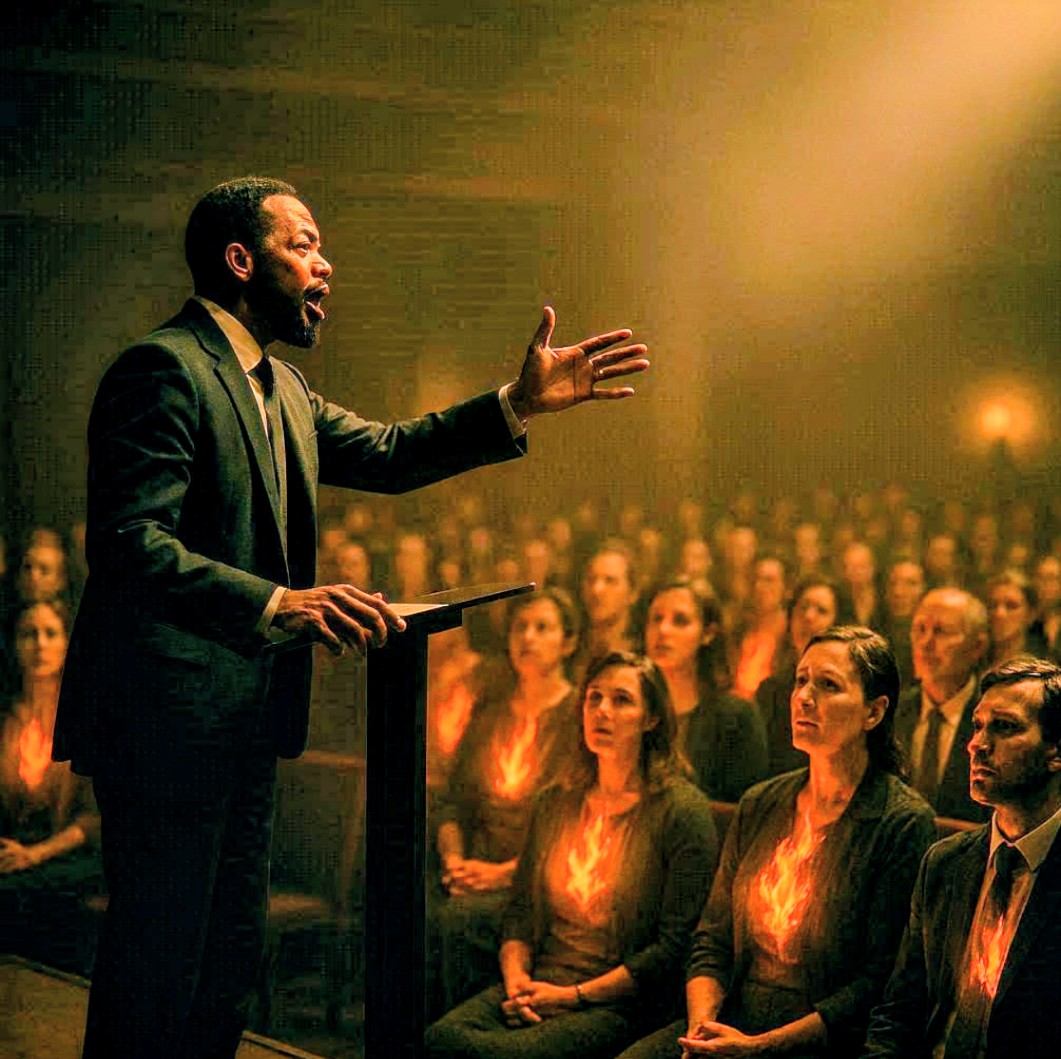
We should desire to grow and advance in the kingdom. Even if the desire is not there, sound teaching can stir us up and set us on the right path; that is the power of sound teaching. Faith comes by hearing and hearing the Word of God. Sound doctrine imparts faith to the hearer. It opens up realms of possibility and understanding. The minister is able to open up dimensions in the spirit that were hidden and inaccessible so that they lay in plain sight. When we are exposed to such calibre of teachings we cannot remain unchanged. The Prophet Jeremiah says your Word is like fire shut up in my bones. Sound doctrine and teaching possess the ability to impart this fire within us where we cannot sit idly, we are compelled to speak as the Prophet Jeremiah or to even minister.

Some murmur and chastise believers for making excuses and not participating in the kingdom however part of the problem is the teaching that exists in the body. No one is left the same after hearing a certain type of teaching. It literally forces one out of their comfort zone onto the field. Yes, Holy Spirit does teach the believer and the church is not entirely to blame. Sometimes when He does, bad teaching has done much damage and the truth is confronted with resistance. Some individuals are hardened to truth as consequence of the lies of bad teaching. The soil of the heart is hard. Our hearts need to be fertile for the seed of the Word to be planted and not be choked by unsound doctrines, teachings and everything posing as a foe.

The Bible tells us that we are to grow in the knowledge of God. Acquiring spiritual knowledge should not be for bragging purposes or to merely quote books but to evoke spiritual hunger, bring understanding so that we are better positioned in our gifting or call and to cause us to walk in dimensions that the author walked or is walking in. God is perpetually calling us higher.

There are certain messages that leave us with sentiments such as “that was such a good message or the pastor was on fire today”. However, that is missing the point. The message is never for excitement or nice sentiments. It is supposed to grow us up into all things in Christ and more.We should ever be growing in Christ. Additionally, unsound doctrine poses the danger of resulting in the hearer becoming religious, rigid regarding spiritual things and deficient in the knowledge of God and His ways. It produces the heart posture the Pharisees possessed. This is why the practice of quoting scripture is prevalent yet the ways of the Spirit of God are still enigmatic and mysterious to us.

In contemporary times, some believers only attend church because the music is good. That is missing the point. Church was never meant to be a feel good place. It is not a massage parlor meant to massage our feelings. We need to ask ourselves: Are we receiving strategies for our lives and those around us? Are we being equipped to take over in our sphere of influence? Are we becoming like Christ? Is our lens getting sharpened to see the Lord clearer as we proceed to attend church?

Elementary teachings are meant for babes. When we are babes in Christ, these teachings are necessary, for, advanced ones will be impossible to grasp or comprehend. However when we find that we have grown, we should pivot and look for more advanced teachings. Thus, as we are maturing, it is significant that our “curriculum” advances lest we remain babes forever.

Glasses that aid in seeing His glory

The angels in heaven are bondservants of worship to the perpetual revelation of the glory of God. They are bound to see and respond to it. They see His glory at maximum potency, in all its might and splendor. There is nothing hindering them from seeing clearly.

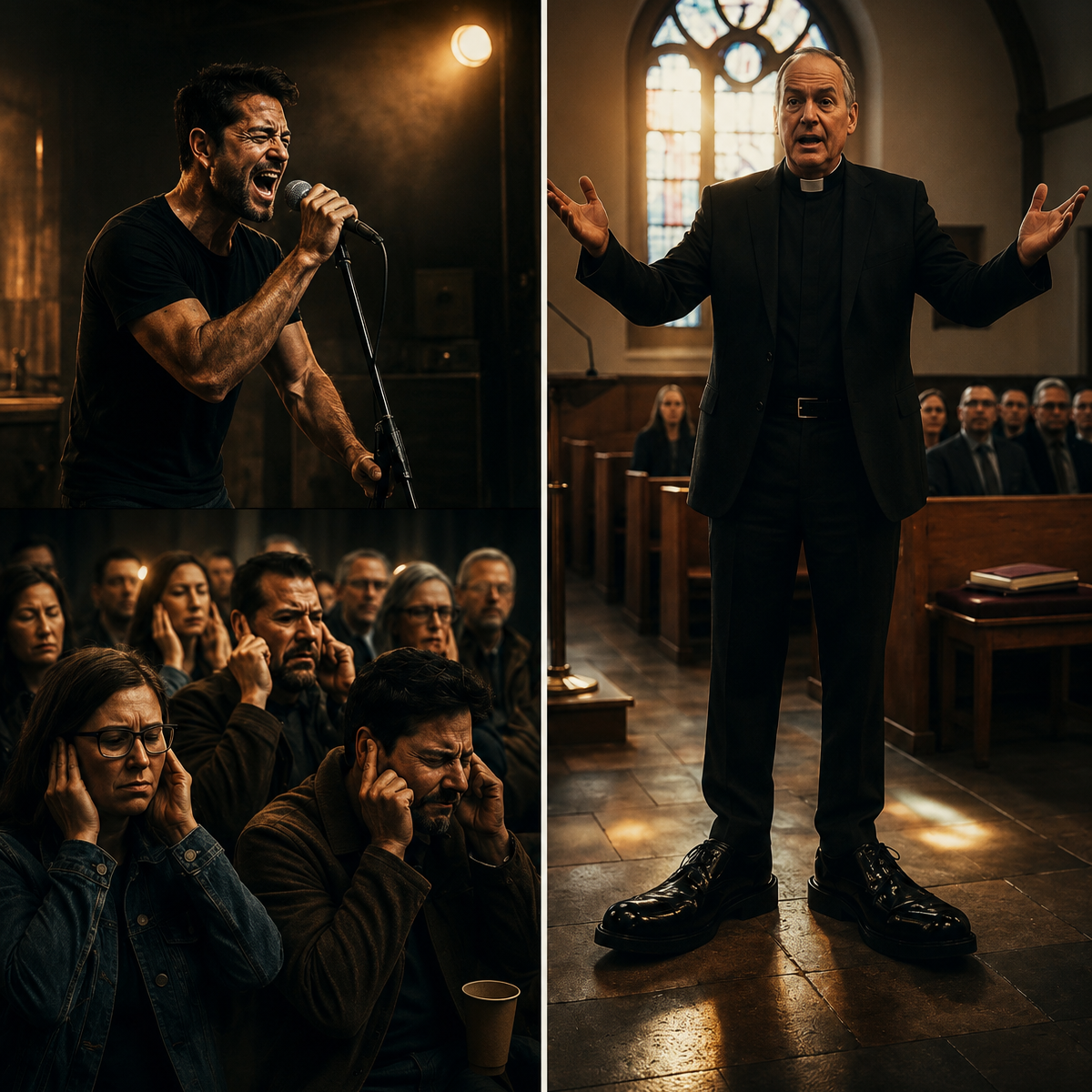
The inhabitants of the earth( us) are not as privileged. Our bodies cannot withstand seeing the glory of God in that manner, it would destroy us. The Lord however desires for us to be witnesses of His glory so that we give Him the honor due to Him. He has adorned the earth with His creatures and wonders. He utilizes the sky as a canvas and like a painter, unleashes His creativity and beauty on the sky and puts His wisdom on full display on the earth. We observe how the stars and planets remain in space and do not fall on us like rain. The sun emerges faithfully each day and He gives man gifts, talents and abilities. However, people are benighted. They idolize people and their gifts. They are mesmerized by individuals and worship the ground they walk on. We are to give honor where it is due, yes, but it is largely given in a way that it commences and ceases with the gifted persons. Yet the gift was given for us to be witnesses of God’s glory! We were meant to see the gift and be in awe of the Lord, not the individual. When men pull attention to themselves, others are taken with them and not the Lord. When we see the wonders of the world, the animals that the Lord has placed on the earth and we marvel at the animals without that marvel pointing to the Lord, we have sadly missed the point. The marvel was to serve as “glasses” for us to catch a glimpse of His glory and be in awe of Him. The glory of God causes time to figuratively stand still. It causes one to freeze and marvel at the Lord in wonder. That is the point.

Next time you hear someone singing, preaching or you witness a stunning bird or creature; pause and appreciate its beauty.
Subsequent to that, be conscious of how the Lord imagined and created it or gave that gift. Finally, channel the awe at the Lord, not the animal or the individual.

Make a plan weekly to seek out the glory of God. Make a conscious effort to see it and let the “glasses” given to you in nature or individuals serve you well.

To the Great Creator.  

 How great you are. You have ardoned the earth with your beauty, light and splendor. Your creation echoes of you in varied ways. Each singing a song only taught by you to the audience in the earth. Some notice and sing along, becoming enthralled by you. Awe captives and carries them away as spoil, forever ruined by your greatness, wisdom and existence. Some like the blind reduce the song to science and nature. Creation however unbothered by their misunderstanding and indifference, continues to unwaveringly herald your existence to everyone, crossing barries of age, race and gender.it refuses to be tamed or silenced. From the modesty of the dove to the fierceness of the lion..the hardworking ant to the peacock with its glorious plumage..your existence is echoed through generations….

Your creation, my dictionary

As I look on Your creation it feels as though a pair of glasses have finally been put on me. A dictionary has been placed in my hands. Languaging has been given to enhance my understanding and remove the babblings that remained. My lense has grown sharper to see more vividly your greatness and majesty….

Using our will to follow Christ

The Lord said to love Him with all our hearts and soul. The soul comprises of the mind will and emotions. Habbakuk 3:17-19 says Though the fig tree may not blossom, nor fruit be on the vines, though the labour of the olive may fail, And the fields yield no food; Though the flock may be cut off from the fold And there be no herd in the stalls .Yet I will rejoice in the Lord, I will joy in the God of my salvation. The Lord God is my strength; He will make my feet like deer’s feet ; And He will make me walk on my high hills. Instead of succumbing to the barrenness and hopelessness Habbakuk chose out of his own volition,an act of his will to rejoice in the Lord. We do not have to be at the mercy of our circumstances. The Holy Spirit can fortify us in such a way that we are enabled through our will to remain connected to Christ as our Vine. The Lord says remain in me and I will remain in you. The Lord gave this command being cognizant of the fact that we will face disappointments, heartache, pain and everything else that would give us reason not to remain in Him. However, He also expects us to choose Him in spite of it, and we can. Here are other instances where the will was used to remain in the Lord:

This one thing that I do, forgetting the things that are behind and pressing on to the high calling in Christ(Phil 3:13)

More than that, I also consider everything to be a loss in view of the surpassing value of knowing Christ Jesus my Lord. Because of him I have suffered the loss of all things and consider them as dung, so that I may gain Christ( Phil 3:8)

Though he slay me yet will I trust in Him( Job 13:15)

I will stand upon my post and see what He will say to me( Hab 2:1)

I will bless the Lord at all times; His praise shall continually be in my mouth(Ps 34:1)

But I will hope continually, and will yet praise thee more and more( Ps 71:14)

I will see the goodness of the Lord in the land of the living(Ps 27:13)

I will walk in my integrity(Ps 26:1)

These are but a few illustrations given to us in scripture concerning the participation of our will in following and remaining in the Lord. The Lord  is sovereign however we are expected to do our part. There are instances where He moves on our behalf however there are times where we have to choose Him as He has chosen us. 

The battle with sin

When we get saved,the Bible says that we are no longer under the control of the prince of the power of the air. We are delivered from darkness into the kingdom of the son of his love. We have the Holy Spirit and we have grace to live right. So why is there a culture of sinning among the saints?

When we get saved we receive a “fight” between us and what once enslaved us. We can resist or are called to resist what we once easily yielded to without question. We are called to pluck out our eyes when they cause us to sin or cut off our hand which causes us to sin. All this denotes a  severe confrontational uprooting of sin. We are not to take it lightly. Sometimes we battle with sin due to not being cognizant of the fact that we are cutting off the fruit which proceeds to rear its head instead of addressing the root.

The snare of sin

We communicate the dangers of sin and why we should not sin and we should. However, wholeness and inner healing should be spoken of equally. Our broken childhoods, unmet needs, wounds in our souls, fears, and hidden issues in our hearts make us susceptible and vulnerable to sin. We are a three part being namely spirit, soul and body thus, things  are not always as they seem. Consider the following illustrations;

-The command from the Lord is to not fornicate yet a man who has rejection issues coupled with idolatry falls prey to a counterfeit love interest who threatens to end the relationship unless they engage in sexual relations.They find themselves in a cycle of fornication due to not standing up for the truth and remaining single until the Lord sends them a Godfearing partner.This is a multi layered situation and conundrum which arises from being on the throne of our lives instead of giving that place to the Lord. The enemy’s wiles will possess greater sting and potency on such a one.  

-Gluttony thwarts the efforts of one who is overweight because they find comfort in food. Without addressing the emotional aspect of this dynamic they remain in a pool of defeat.

-The man who oversteps on his marriage due to soul ties they failed to break ahead of getting married.

The list is neverending. Our needs and brokenness give expression to sin in our lives not because we want to, but due to the fact that we are seeking to have our needs met. Unmet needs when not addressed and identified lead many on a voyage of bondage to sin. Many attempt to fast and be delivered from demons to no avail. Frustration accompanies many on their walk with the Lord not by virtue of a deficiency in effort but due to unresolved issues that lie behind the veil, maneuvering them with subtle tyranny like a puppeteer. Until the issue is addressed, bondage will persist. 

Mind renewal as a tool to overcome 

 We act according to what we believe. The dangers of not addressing issues in our lives and seeking healing from past or even present hurts is that they serve as data for our subconscious to utilize in order to “protect us” . Our minds and soul seek to protect us from threats and will ensure that we are faithfully acting according to the script it has for us. For instance, when we have a belief that no one can be trusted, we will act according to that belief by not trusting anyone. We need not exert much effort, the action will automatically align with that belief. We will even find ourselves sabotaging healthy relationships to remain faithful to the script in our minds. This is why the Lord tells us to renew our minds because we are wired to act according to what our minds believe. 

Conversely, we may have knowledge of the truth and still fall into sin! 

When this occurs, we are required to confront a lie we are believing. Lies lead to bondage which prohibits truth from being implanted in us. They cause us to come into agreement with the enemy, leading to a formation of strongholds. Effort is required to dismatle them. We have to apply the word repeatedly and implant truth that will take root.We do not put on new clothes without taking a shower or a bath first, yet many attempt to put on Christ without washing themselves with the water of the word. 

For those who are exposed to prophetic environments, the solution presented is mainly deliverance and prayer. However, that is a power encounter that will uproot the entity. Many experience deliverance only for bondage to return on their way home. The issue needs to be severed at the root. At times counselling is required to ensure long lasting freedom. When the root is unknown, deliverance is ministered and the person fills up with the Word in general and not according to how they were bound. This will lead to frustration. 

Sometimes, issues in our lives make it seem as though the weapons of the enemy are exceedingly potent when in actual fact, he just walked in on a situation that was compromised and precarious, giving him an advantage. He wins victories he should not be winning because he is after all a defeated foe. when two individuals, one who has a robust immune system and one who is immunosuppressed are exposed to the same germ, the former can walk away from that encounter unharmed while the latter can be hospitalized. It’s not that the germ suddenly increased its potency when it entered the immunocompromised individual. It is uncomplicated for the spirit of rejection to oppress an individual who has wounds of rejection. It is facile for self pity to oppress one who is compromised in this area with a victim mentality. Little is required to establish agreement and achieve torment. It is not that the spirit was vicious, but the battle was lost before it commenced.

Ultimately, many forgo the discomfort of freedom because of the solace they experience in bondage. The process of liberation often necessitates the agonizing severance of ties that, while  dear to us, serve as the life giving force to our confinement. When we are in love with our chains, we won’t seek to be free. The Israelites moaned concerning the manna. They longed for the fish, cucumbers, melons, leeks, onions, and garlic they ate in Egypt. They forgot that they cried out to the Lord to set them free and began to long for slavery when they were confronted with the price and challenges connected to their freedom. Unfortunately, this is the reality that some choose for themselves. 

Living right does not exempt us from testing, it invites it

God strips us for various reasons. He can even strip us of what we have to get our attention and pull us to Himself when we have wandered off. 

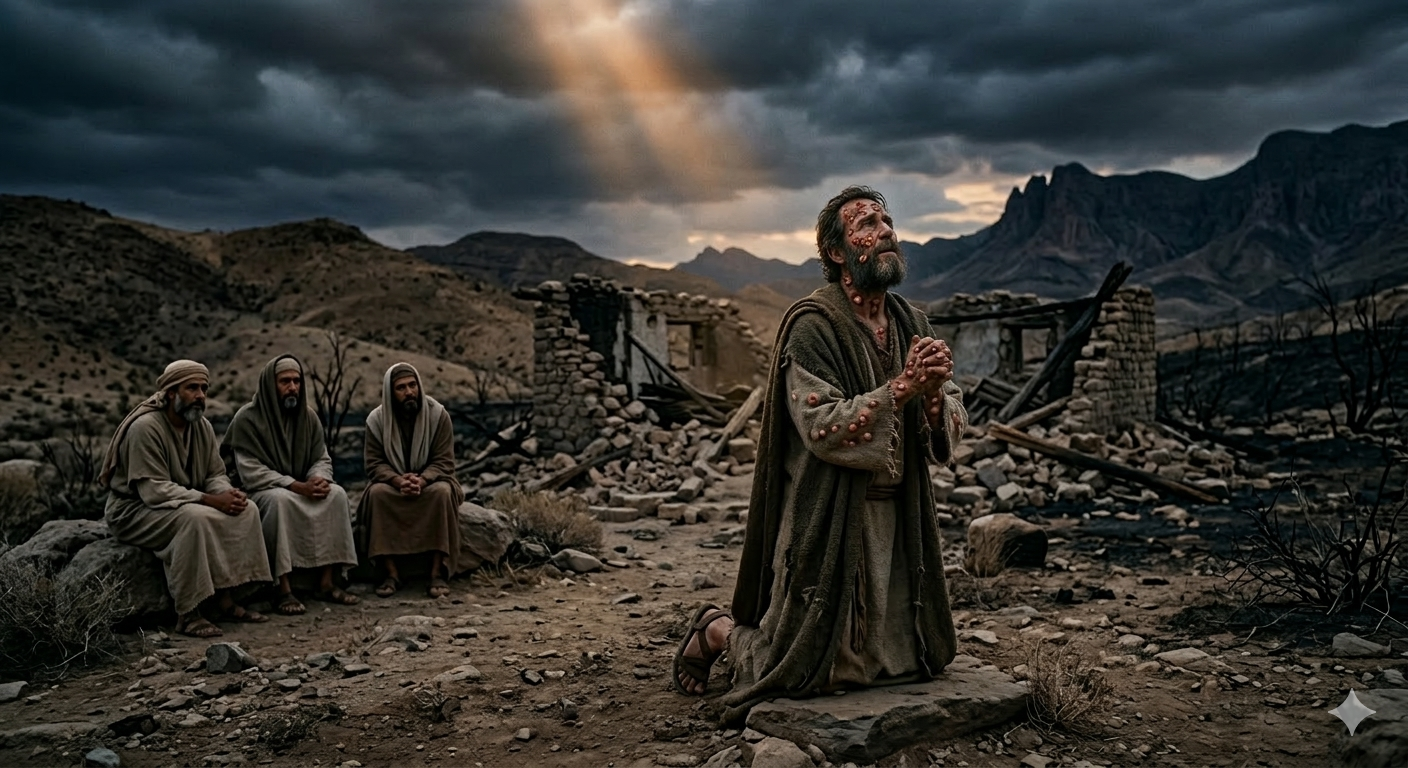
One of the reasons God exposed Job to the devil was to increase him. Contrary to popular belief, misfortune does befall the obedient.

Job was proceeding well in his Christian walk because he wasn’t being tested. When he was, he questioned God and sinned. Sometimes we are “good believers” due to the Lord not permitting any tests our way. We spend time with the Lord blissfully and once we interact with the world, we find ourselves getting offended at a snarky remark or hastily giving into anger when the Word instructs us to be slow to it.

Job felt that so long as he lived right, no testing should befall him. He trusted in his righteousness instead of the Lord. He felt that God was being unjust (Job 9 :22-24) Joseph on the contrary,  fled  Portipher’s wife’s seduction and yet was incarcerated. God left him there for yrs even though he was innocent, however, he dared not question or complain against  God. Living right does not exempt us from testing, it invites it. 

Shadrack, Meshack and Abednego(The three Hebrew boys) uttered the famous words “our God will deliver us but even if he doesn’t we will not bow” ( Daniel 3 : 17-18) This is what Job lacked. He felt that his righteousness should exempt and disqualify him for testing but the 3 Hebrew boys said “even if he doesn’t deliver us, we won’t bow”. They trusted in the Lord regardless of the outcome.

Testing shows where our trust lies. It exposes us.

Some people upon witnessing how the Lord took us through the fire and brought us out unscathed, or at least hear that He did, believe in His existence. Our testimonies are potent in giving people a taste of the reality of our God. The Lord calls us to be His witnesses. What is a witness? According to Merriam-webster disctionary it is:

  • 1  attestation of a fact or event : testimony
  • 2
  • : one that gives evidence
  • specifically : one who testifies in a cause or before a judicial tribunal
  • 3
  • : one asked to be present at a transaction so as to be able to testify to its having taken place
  • 4
  • : one who has personal knowledge of something

As it pertains to believers, we share about the Lord, our testimonies and how we have seen that the “God of the Bible” is truly who He says He is. He performed this in my life or so and so’s life.I saw it.

King Darius recognized that Daniel’s God is the true living God when he survived the lions. 

Sometimes, issues that the Lord permits are typically enduring due to the Lord having an end goal. He is seeking to accomplish something.The capacity of the Lord to utilize a life surrendered in faith is beyond human comprehension. The Bible says those that know their God shall do exploits(Dan 11:32), not those who believe in the Lord. Consider Daniel. His faith in God changed the worship of an entire kingdom! ( Daniel 6: 26).No church, nor group of believers were present.The Lord accomplished this through one man . Additionally, we observe this in Paul’s life as well.When he was on the island of Malta he was bitten by a venomous serpent that should have ended his life. The Lord permitted this because the inhabitants of that island knew the type of species the serpent was.Needless to say, it opened the door for the gospel to be preached and for souls to be won. Such narratives are replete in the body of Christ.

Furthermore, Paul and Barnabas were scourged and through that painful, agonizing encounter, the jailer and his family were saved. On the tv program, The 700 club, a story was narrated of a group of young men who travelled to an island where the Word had never been preached before. Lamentably, the men were killed by the inhabitants of that island. However, today, the descendants of those martyrs are preaching on that island. The people who murdered the young men received salvation; however, what paved way for this salvation were the valiant young men who were on fire for God and wanted to take the Gospel where it had not been heard. I can recall the story of a prominent pastor in the body of Christ who took the gospel to an Islamic state. He and his team were severely battered anand bruised and he inquired of the Lord if they should depart and go home. The Lord exhorted them to stay and today, they have been able to establish a church there. 

 Misunderstanding the ways of the Lord yields errors in judgment. Unbeknownst to Job, he was being prepared to receive a deeper revelation of the Lord. He concluded after the Lord questioned him “ truly I spoke of things I have not known”(Job 42:3). Some revelations and increases do not come through fasting or praying but through overcoming testing. Job is  testament of this. 

Trials, tribulation and afflictions

The life of the believer is one that is not without trials, afflictions and tribulations. The Lord even guaranteed that we will face trouble in this world(John 16:33). Sometimes we make the error of telling the unsaved that if they follow Jesus Christ then all trouble will cease in their lives; that everything in their lives will go smoothly. We even have church songs that validate this fallacy saying, “there are no troubles when God is near”. However, scripture states otherwise. The Lord has not promised to keep us from trouble. He thrusts us into it, knowing that He has overcome the world. He has called us to overcome. The Bible says He has given us an overwhelming victory(Rom 8:37) however that is our spiritual standing. We have to walk it out. 

We are called overcomers, yet in the book of Revelations we are told repeatedly that “he who overcomes…” and a reward will be given such a one. So we are to overcome whatever that we face to win the reward. 

The pursuit of a righteous lifestyle is not a mechanism for the avoidance of trials, nor should it be utilized as such, for such an endeavor shall prove futile. One must adhere to a path of rectitude solely to honor the Lord and to submit fully to His divine Lordship. Trials remain a distinct and inevitable phenomenon that shall manifest regardless of one’s personal conduct

​It is profoundly distressing to encounter adversity despite having exhausted every effort to prevent its occurrence

This may be the believer suffering from lung cancer yet they haven’t smoked a day in their life. Or the married couple struggling to conceive yet walked in purity in the days of courtship and  have honored their marital vows. Nevertheless, the grace of the Lord is sufficient for us.

Many are the afflictions of the righteous but the Lord delivers him out of them all(Psa 34:19). The Lord desires us to have experiential knowledge of His Word and not to merely quote scripture. When we face trials and see the Word cause a shift, a resolve is forged in us. Our faith in the Word deepens. It is an error to think that living right and walking in obedience exempts us from trials. Job received a good report from the Lord yet he was sifted by the enemy. 

With that said, the enemy goes about like a roaring lion seeking whom he may devour(1 Peter 5:8). He cannot devour everybody. As believers we will face the enemy until the day we leave this earth. We don’t even have to do anything for him to attack us; we are to trust that whatever attack the Lord permits will be used for our good.

Some benefits of trials and tribulations

  • They produce patience
  • They bring us closer to the Lord
  • We can be anointed by what we go through so that others can be set free through us
  • They bring us closer to the Lord
  • They strengthen our trust in God
  • We grow through them
  • They make us unshakeable and not easily moved 
  • The Lord can use them to prepare us for our destiny
  • They can equip us with compassion for those going through what we went through
  • The Lord can expose the enemy’s wiles and strategies to us
  • Our testimony of overcoming them can encourage others going through the same thing
  • Overcoming them brings promotion from the Lord and He can entrust us with more responsibility

It is imperative to know the Lord’s role and ours when going through trials. Who has the Lord promised to be for us while we go through trials? Here’s a few:

  • A refuge and  stronghold ( Psa 9:9)
  • Our confidence( Proverbs 3:25-26)
  • The One who will fight for us and we are to be still(Exo 14:14)
  • He will uphold and strengthen us( Isa 41:10)
  • He will be with us in trouble, deliver and honor us (Psa 91:15
  • Cause our enemies to be defeated before our face and scatter in 7 directions
  • Our strength(Psa 37:39)
  • Hide us in His pavillion, in the secret place of His tabernacle and set us upon a rock. He will cause our head to be lifted above our enemies( Psa 27:5-6)

Our role is:

  • To take refuge in Him(Nahum 1:7)
  • Trust in Him
  • Cast our burden upon Him(Psa 55:22)
  • Submit ourselves to Him, resist the devil(James 4:7)
  • Stand(Eph 6:13)
  • Fight the good fight of faith(1 Tim 6:12)
  • Cry out to Him(Ps 34:17)
  • Maintain our gaze on Him(25:15)
  • Remain in His presence
  • Know that we are kept(Ps 121:5)
  • Know that He will make it work for our good(Rom 8:28)
  • Seek His face, remind Him of His promises and who He promised to be for us while in it

There are moments where we can barely hold on to Him and our hope is shattered. The Lord is called the author and finisher of our faith. He has promised to uphold us. It is written: The steps of a good man are ordered by the Lord and He delights in his way. Though he fall he shall not be utterly cast down for he will uphold him with his hand(Psa 37:24). He is called the lifter of our heads(Psa 3:3). So we should never feel that if we fail then it will be our demise. The responsibility for our spiritual sustenance does not reside within ourselves; rather, even within the specific roles we are ordained to fulfill, our absolute reliance must be placed upon the Lord.

 We are required to remain steadfast in His presence because that’s where our safety resides. We encounter superfluous adversity when we abandon the bounds of His presence and attempt to resolve the problem on our own and risk losing the “adding” that was connected to the trial . Additionally, God ordained trouble can beget more ungodly trouble, leading to a plentitude of issues God never intended for us to experience. When the Lord leads us through adversity, we are to trust that He has already provided means to sustain us. We may not be made privy to this and so we are required to walk by faith. Consider Elijah who was fed by a raven and Paul who was provided for in prison by the Philippian church. The trial is not to merely discomfit; it is always for a purpose. There is grace when we go through trials that but that grace is only in His presence. Trials add to the believer, and if they ever take anything away, it was a hindrance or He excised it to ensure more fruitfulness. Psalm 138:7 says Though I walk through the midst of trouble you will revive me. You will stretch your hand against the wrath of my enemies and your right hand will revive me. 

Revive according to Strong’s concordance means: keep, give promise, nourish, preserve, quicken, repair, restore, save, be whole…

Those are the benefits of walking through the midst of trouble! He promises to keep us. That means we will not be lost to Him while in trouble. He will give us a promise and we certainly require it so that we do not despair. 

To nourish according to the English dictionary means

  • To nurture , rear
  • To promote the growth of
  • To furnish or sustain with nutriment: to feed
  • Maintain, support

So the Lord utilizes trouble as breeding ground for our growth. He takes on the role likened to that of a mother towards her newborn babe or the role of a committed gardener. He is steadfastly committed to our growth and He provides the necessary nutriment and scaffolding. When we do not know that, we fall into resentment, offense and get angry at Him. Regrettably, due to our myopic view, we may walk away from Him.

Additionally, we may pray to the Lord and He might answer the prayer with a trial. Why? Because it adds to us. One of the definitions for revive is restoration. When we are not acquainted with how He sometimes answers prayer we may be tempted to be offended at Him. We may feel that He is not answering our prayers due to falling into endless trials. However it is written that we are to rejoice when that transpires

Sometimes the deliverance is in the fire. Believers often petition the Lord with the expectation that He shall prohibit the occurrence of trouble. Nevertheless, the Sovereignty of God occasionally permits such hardships to transpire, recognizing that the most sscaffolding. Salvation is often achieved through the experience of the trial rather than the avoidance of it.Although Daniel prayed to the Lord ahead of time, he was saved through immersion in the Den.

Myles Munroe: Daniel’s quality of Kingdom faith is very rare today in the religious community as many of our contemporary doctrines and belief systems promote a shallow version of faith that focuses more on “avoidance faith” than enduring and overcoming faith. It is a faith built on avoiding troubles, trials, and tests rather than enduring and overcoming these temporary opportunities to prove the eternal power of our Kingdom. We need the faith of Daniel to be restored to our world today.

It is written when you go through the waters, I will be with you; and when you go through the rivers, they will not overwhelm you. When you walk through the fire, you will not be scorched, the flames will not set you ablaze ( Isa 43:2)

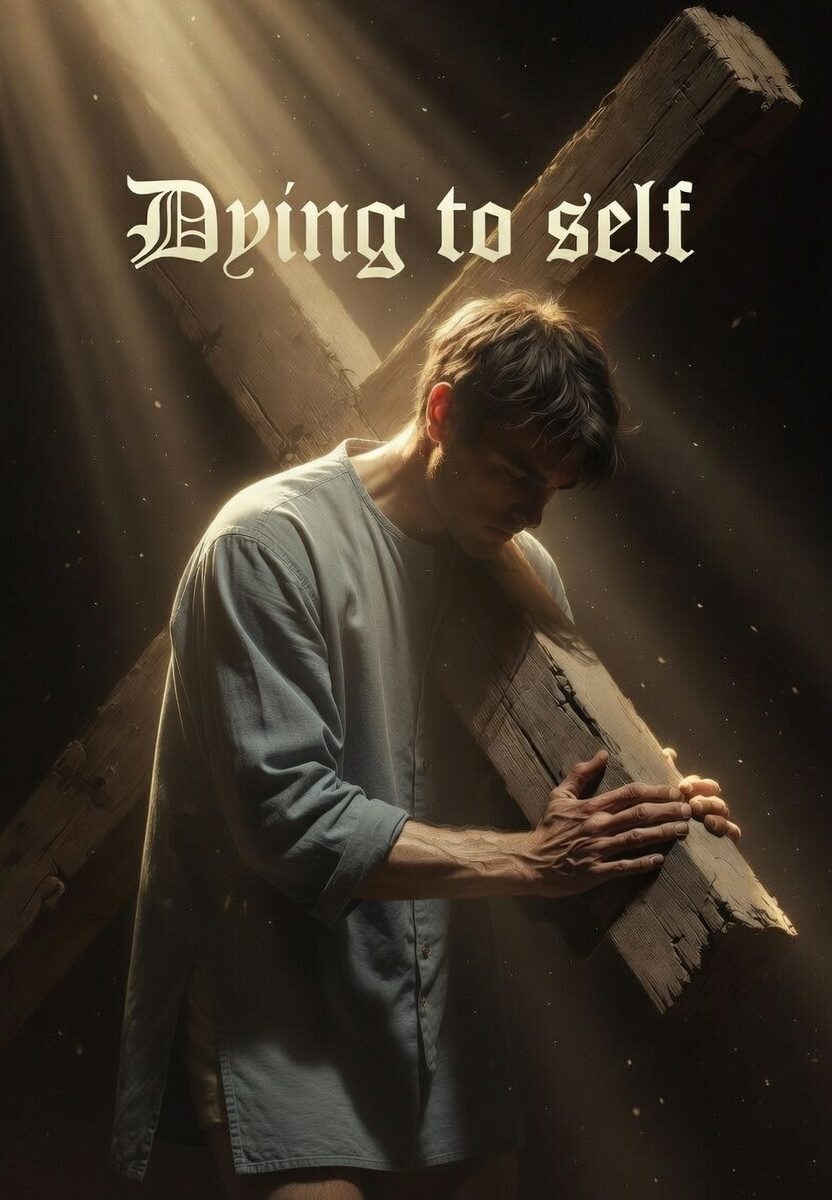
Dying to self

We are called to die to self. Paul says I count the things I left behind as dung so that I may gain Christ(Phil 3:8). The Lord gives us commands that we are to follow however we need to rely on the Spirit to do so. Many are defeated by sin due to relying on themselves. The Holy Spirit is called the Helper for a reason. Paul says to the Galatians; You foolish Galatians! Who has bewitched you? Before your very eyes Jesus Christ was clearly portrayed as crucified. 2 I would like to learn just one thing from you: Did you receive the Spirit by the works of the law, or by believing what you heard? 3 Are you so foolish? After beginning by means of the Spirit, are you now trying to finish by means of the flesh ( Gal 3:1-3)This is the reality of many. We want to overcome without ever leaning on the Spirit thus we weary ourselves and wallow in sin, feeling utterly defeated. 

Dying to self includes dying to our own will, ways and desires. The Lord places a demand on us to leave what is misaligned with His will for us. This is challenging as we have our own will and desires however, we are to permit the Lord to actually be our Lord, which means owner.What do we do when we are enamored with what He demands we relinquish? 

  • We can ask Him to give us the desire to let it go
  • We can ask Him to take away the love we have for the item or person
  • We can ask to be fortified to obey His command
  • We can ask Him to show us the truth about what we love

We are to plant ourselves in His presence, lean on Him so that we receive His strength and obey. We are then to count that item as “dung” and cease yearning for it. If we keep looking at it, our affection will never die. We are to stand with the Lord in agreement and not with our hearts. When we stand with the Lord,our will, will die. This is also a helpful strategy in overcoming sin. We can never overcome what we yearn for. 

Dying to self is a daily choice, an unceasing commitment. The Apostle Paul said I die daily(1Cor 15:31) When we stop dying, we commence to live in sin. 

Amy Klutinoty: Die to self.

Die to your ego. Die to what you think you deserve. Die to the fear that holds you back. Die to materialism. Die to greed. Die to worldly accolades. Die to the addiction of seeking attention and validation. Die to fleshly lusts and addictions. Die to the desire to always be understood and accepted. Die to false expectations. Die to worldly reputation. Die to your vanity, your pride…Die to self and live for Christ

Benefits of dying to self

Dying to self empowers our christian walk. It ensures our forward movement and loosens the grip of entanglements that hold us back. We are liberated to be consumed by the will of the Father. Jesus, who had no sin was born for the sole purpose of living for the Father’s will. He even said “ the prince of this world is coming but he has nothing in Me. He has nothing in common with Me”(John 14:30). He had nothing in common with the enemy and thus He proceeded to make strides and progress in His personal growth, growing in favor with God and with people(Luke 2:52) and fulfilling His ultimate purpose of dying for our sin. 

Additionally, He was unnerved by people’s rejection, preferences, mockings, hatred and when He was misunderstood. We stand to gain this and more when we die to self. 

King Saul was not dead to self and this caused a plethora of issues that disqualified him as a king. He was controlled by people, lived to please his followers and sought their approval more than God’s. The Bible says fear of man brings a snare but those that trust in the Lord shall be kept safe(Prov 29:25). Everything that serves as oxygen and a necessity for the survival of self will serve as a chain and a hindrance to us. It is an unnecessary weight we don’t require. 

Other things that inflate self that are required to die are 

  • Our timing
  • Our preference and how we think our lives should be
  • How we feel the Lord should speak to us

I have been crucified with Christ. It is no longer I who live, but Christ who lives in me. And the life I now live in the flesh I live by faith in the Son of God, who loved me and gave himself for me. (Gal 2:20)

Because we were crucified with Christ, there should be a marked difference in how we live now. The old us was living without any faith in the Lord. We could face life without Him however,  now that we are saved, we should not be able to do life without Him. Even the Lord said He lived because of the Father(John 6:57

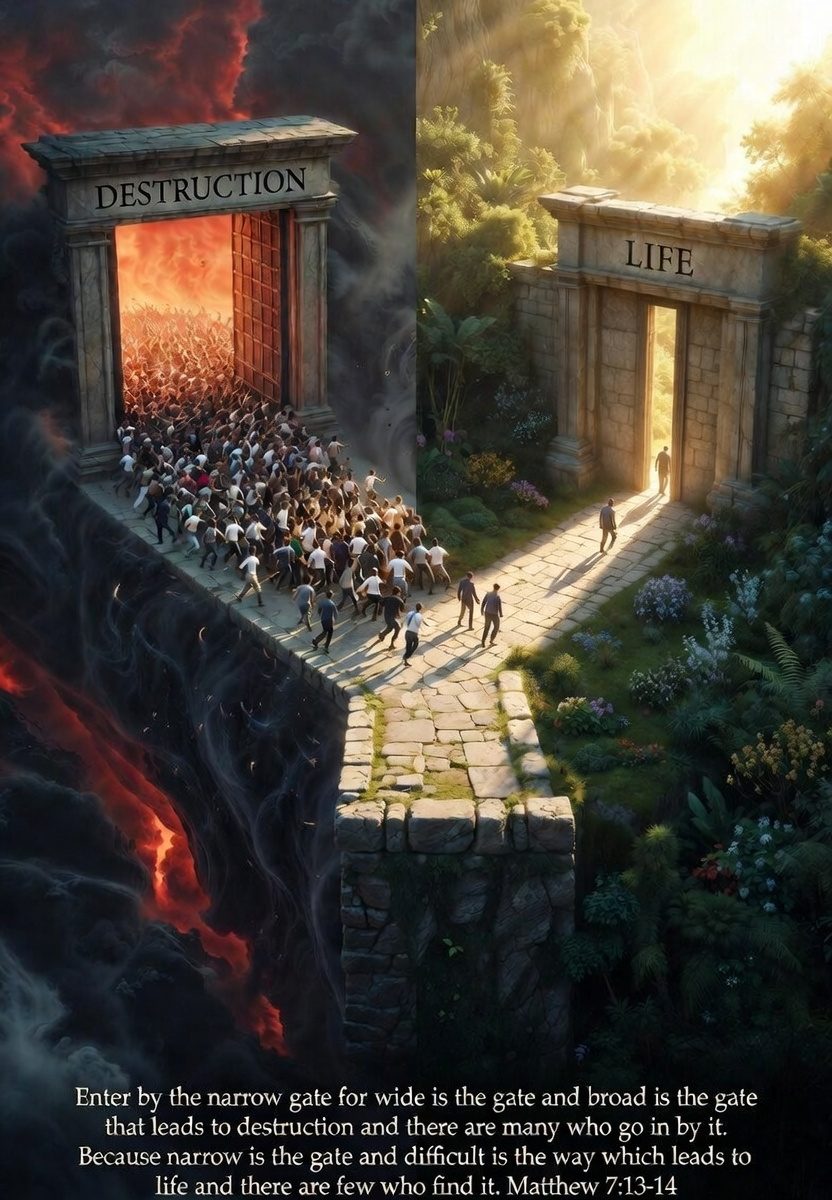
The narrow and wide gates

The way of destruction accommodates many individuals; however, the way that leads to life is selective.The way of destruction has a low standard and is low maintenance. Minimal effort and exertion are required and it is accessible. The wide gate places no demand on the one going through it. Many companions are found in the  destructive way, ensuring that solitude is a foreign concept. The difficult way is challenging, not impossible to find. The narrow gate selects and determines what can come along with us on the journey to the difficult way. It requires one to be lightweight. This is why the Lord purges our conscience of dead works and repentance is a way of life in this way. Agreements with the enemy are shut out and we walk circumspectly to avoid getting entangled with anything that will make us lose our footing.Heb 12:1 says we are to lay aside every weight which means burden (weight). If it hinders us it is weight that should be set aside. 

Only the Holy Spirit can determine what this weight is. Many may say what they are accommodating in their life is not necessarily “weight” because they find it pleasurable and even destressing. Nevertheless, it is an observable fact that sin offers a transient pleasure. It is often most difficult to relinquish those elements which the Holy Spirit must excise, for they are frequently rooted in our affections.

We are naturally inclined or predisposed to love what the Lord hates. It is only when the Holy Spirit works in us to hate what He hates do we come into agreement with Him. The narrow gate makes it difficult to find the way that leads to life on account of many wanting to find it without going through the selection process; nevertheless, Jesus told us that there are requirements to following Him. We must deny ourselves, pick up our cross and follow him. Many want to follow Him without meeting His requirements and by doing so, close off the way to the path that leads to life in their own faces. Many want to bring forbidden items on the journey thereby making it even more arduous, laborious and impossible to find this path leading to life. Paul said he counted everything as dung so that he may gain Christ(Phil 3:8). This path cannot be stumbled upon nor be found arbitrarily. There needs to be a conscious and deliberate effort towards finding it. It is meant to be found-”few find it”. It must be sought after. It must be desired.Once found, it leads to life. We will experience life on this side of eternity and in the next. It is life for your soul, spirit and body. We may lie to ourselves and claim to be on this path but the absence of life will testify against us. It will prove us to be liars. 

Strive to enter through the narrow door, because many, I tell you, will try to enter and will not be able(Luke 13:24)

Consider the rich young ruler, who was told to divest himself of all possessions and give the poor to gain eternal life; however, he was unwilling. He wanted to do things his way and still enter through the narrow gate. He was barred out. Isaiah 1 chronicles how Israel was in rebellion. They were covered with wounds from head to toe with no healthy spot on their body. Their wounds had not been dressed yet. They brought sheep to be burned as sacrifices and the fat of fine animals. Yet the Lord said it was useless to bring Him offerings and when they lift their hands in prayer, He will not look at them. He wanted to wash their sin away; however, they were unwilling ( Isa 1:1-20). They wanted to serve Him according to their terms;however, He would not have it. He rejected them. He has not changed. If we persist to carve out our own way of worshipping Him we will not enter through the narrow gate.

How can we enter through the narrow gate?

-Living a life of repentance

-Dying daily

-Walking daily in His light where His Word determines our steps

-Seeking the Lord on His terms

-Allowing the Spirit to lead us

-Submitting to the sanctification process

– Avoiding compromise

-Not conforming to the ways of this world

– Putting on Christ which is putting on His character

-Ensuring to seek Him daily with hearts that genuinely desire to know Him

– Loving what the Lord loves and a hatred for what He abhors